
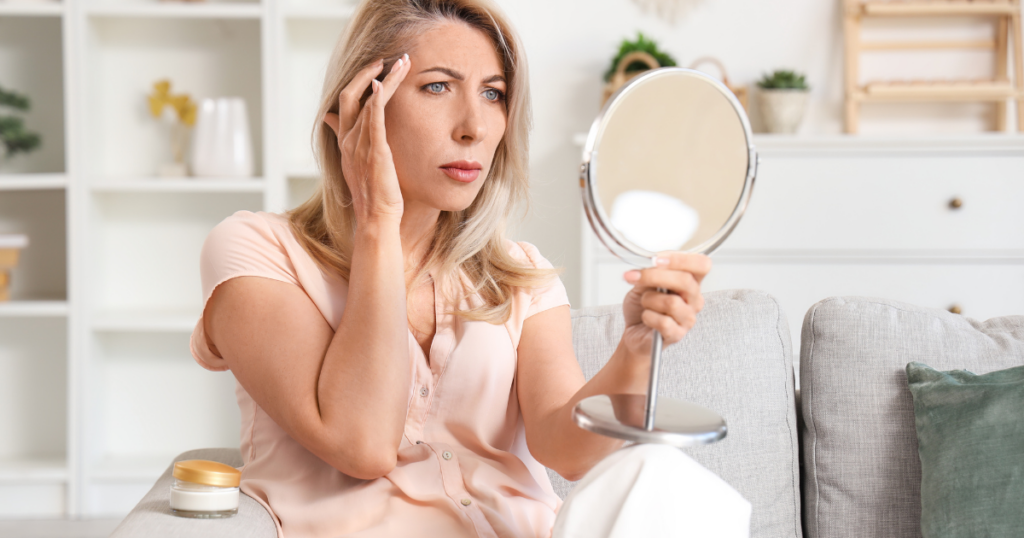
Menopause and perimenopause bring significant changes to your skin and hair. With changing hormone levels, you may notice dry, slack, thin skin. You may also see mor hair on your face, and less on your scalp. With the right care, you can lessen the impact of menopause. Here’s what your dermatologist wants you to know.
What do dermatologists recommend for menopausal skin?
Menopausal skin comes with many different factors. Some people notice more pimples and irritation, while others see more dryness and cracking. Let’s look at some common complains of menopausal women, and how your dermatologist suggests treating it.
Dry Skin
During menopause, skin loses its ability to hold water, so it can get extremely dry. This is especially noticeable in colder weather and dry air. To combat this, we recommend using gentle cleansers instead of soap, applying moisture after bathing and multiple times during the day, and speaking to your dermatologist about your dry skin.
Age Spots & Sun Damage
First, wear your sunscreen daily. Next, schedule a skin cancer screening and ask your dermatologist about treating age spots with lasers or BBL.
Bruising
Decreased estrogen leads to thinning skin which bruises more easily. For some people, retinoid creams may help but lasers are a good option for rothers. Speak to your dermatologist about which one is right for you.
Hair Loss and Thinning
Many women notice thinning hair during menopause. This often starts as a widening part or receding hairline. The important thing is to see your dermatologist as soon as you notice signs of hair loss. Your dermatologist can prescribe minoxidil, laser treatment, PRP, or other options.
Excess Facial Hair
Unwanted hair on your chin, jawline and upper lip is common during menopause. Your dermatologist can help you get rid of it with laser hair removal or prescription hair reduction cream.
Jowls, Loose Skin & Wrinkles
Skin loses collagen quickly during menopause, as it diminishes our skin begins to sag. Jowls appear, wrinkles and permanent lines show up. We have many treatments available to help reverse the signs of aging and restore your youthful glow.
What are the best ingredients for menopausal skin?
As a general rule, you want to look for the following ingredients when choosing your skincare products.
- For Hydration: Hyaluronic Acid, Squalane, Glycerin.
- Barrier Repair: Ceramides, Niacinamide (Vitamin B3).
- Boosting Collagen + Anti-Aging: Retinol/Tretinoin, Peptides, Vitamin C.
- Antioxidants: Vitamin C & E to fight environmental damage.
Your dermatologist can help you create a personalized skincare routine tailored to your needs, with products designed to address your skincare needs.
Crafting Your Menopause Skincare Routine
The basics of a good menopause skincare routine include:
- A Gentle Cleanser. Choose a non-foaming, soap-free formula to avoid stripping natural oils.
- Hydrating Serum: Apply hyaluronic acid or peptide serum to plump skin and lock in moisture.
- Rich Moisturizer: Thick creams with ceramides, niacinamide, or squalane help combat dryness.
- Vitamin C (in the morning, under your SPF). This antioxidant serum protects against collagen-destroying free radicals.
- Retinol (Nighttime). Applying a retinoid (like retinol or tretinoin) several nights a week boosts collagen and cell turnover.
- Broad-Spectrum SPF 30+. Daily SPF is essential to protect against sun damage and spots, especially as skin thins.
Best Menopause Skincare in Reston
Struggling with your menopause skin? We can help! Whether it’s fighting wrinkles or dryness, we’ve got your back. Menopause is a big change, but it doesn’t have to wreak your skin. Let us help.
At Reston Dermatology and Cosmetic Center, we are proud to provide personalized, effective treatment that blends cutting edge science and artistry to give you the results you desire. Contact Reston Dermatology and Cosmetic Center today to schedule a consultation.