
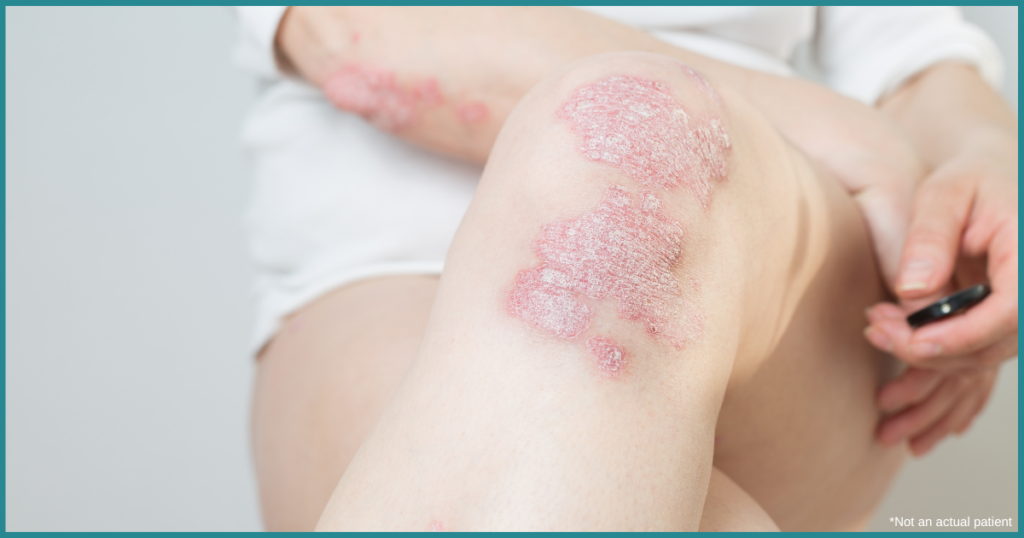
August is Psoriasis awareness month, and we like to highlight this condition and take the opportunity to educate patients. While this condition affects millions of people, there is still a lot of misinformation and misconceptions about the causes, triggers, and treatments.
If you have recently been diagnoses with psoriasis or have a friend or family member who has the condition, you probably have lots of questions. So, here are the top 10 FAQ about psoriasis.
What is Psoriasis?
Psoriasis is a chronic autoimmune condition. It causes inflammation and rapid skin cell turnover, leading to the formation of red, scaly patches. It typically appears on the scalp, elbows, knees, and lower back.
Psoriasis is NOT contagious. But it can be uncomfortable and have a significant impact on your confidence. There is no cure for psoriasis, but it can be managed with proper treatment.
Types of Psoriasis
There are various types of psoriasis, and it can occur on any area of the body. The types of psoriasis include:
- Plaque psoriasis
- Pustular psoriasis
- Scalp psoriasis
- Erythrodermic psoriasis
- Guttate Psoriasis
- Nail psoriasis
- Psoriasis in sensitive areas (also known as Flexural or Inverse psoriasis)
Around one in five people with psoriasis will develop Psoriatic Arthritis. This condition causes inflammation, pain, and swelling in joints and area with tendons and ligaments.
How Do You Get Psoriasis?
Psoriasis isn’t something you can catch. It develops due to a combination of immune system activity and genetic predisposition. If you have a family history of psoriasis, you may be at a higher risk of developing it but its environmental factors that often act as triggers for the symptoms.
Is Psoriasis Genetic?
Yes, genetics plays a big role in the development of psoriasis. However, having genes for psoriasis doesn’t guarantee you will experience symptoms.
Is Psoriasis Permanent?
This is a chronic condition. It’s lifelong, with no current cure. Symptoms can be managed effectively through treatments.
What Causes Psoriasis Flare-Ups?
Psoriasis triggers can vary but often include things like:
- Stress
- Skin injuries
- Infections
- Certain medications
- Cold, dry weather
Avoiding your known triggers and following a personalized treatment plan from your psoriasis specialist can help minimize flare-ups and keep your symptoms under control.
Is Psoriasis the Same as Eczema?
No. but the two conditions are often confused. Both cause skin inflammation, but they have different symptoms. Eczema is often linked to allergic reactions and skin hypersensitivity, whereas psoriasis is an autoimmune disease.
Is Plaque Psoriasis Contagious?
No. psoriasis is not contagious. It is the result of an overactive immune response, not an infection.
Is Psoriasis Contagious Sexually?
No. Psoriasis is not transmitted through skin-to-skin contact. However, psoriasis may appear on the genital area which can be uncomfortable. Your dermatologist can help manage symptoms in sensitive areas with specialized treatments.
What is the Best Treatment for Psoriasis?
The best treatment for psoriasis depends on you, the severity of your symptoms, how your body responds to treatment and more. Common treatment options include:
- Topical treatments
- Light therapy
- Systemic medications
Does Insurance Cover Psoriasis Treatment?
Typically, many insurance plans cover psoriasis treatment, but coverage varies. Our team can help you navigate your insurance plan and explore available options for treatment coverage.
Psoriasis Specialist in Virginia
At Reston Dermatology and Cosmetic Center, we understand how frustrating and uncomfortable psoriasis can be. If you’re looking for help managing your symptoms, we are here for you.
We are proud to provide personalized, effective treatment that blends cutting edge science and artistry to give you the results you desire. Contact Reston Dermatology and Cosmetic Center today to schedule a consultation.